


Hypnotherapy helps insomnia by addressing the subconscious nervous system patterns that keep the brain in “threat mode” after hours. Most sleep problems are not caused by the bedroom or bedtime routines — they are caused by a nervous system that never received the signal that the day is safe to close. Hypnotherapy works with the subconscious mind to quiet the internal alert system, release the worry loops running below awareness, and teach the body a new default: rest. For South Florida residents dealing with chronic insomnia, anxiety-driven sleep disruption, or racing thoughts at night, hypnotherapy offers a drug-free path to lasting sleep improvement.
You do the right things. You avoid caffeine after noon, keep the bedroom cool, put the phone away. And at 2am you’re still wide awake, mind running, body tense, watching the clock do the one thing you’re trying not to watch it do.
The problem isn’t your habits. The problem is your nervous system — and more specifically, the subconscious programs it’s still running long after your conscious mind has decided to stop for the day.

The Real Reason Your Brain Won’t Switch Off
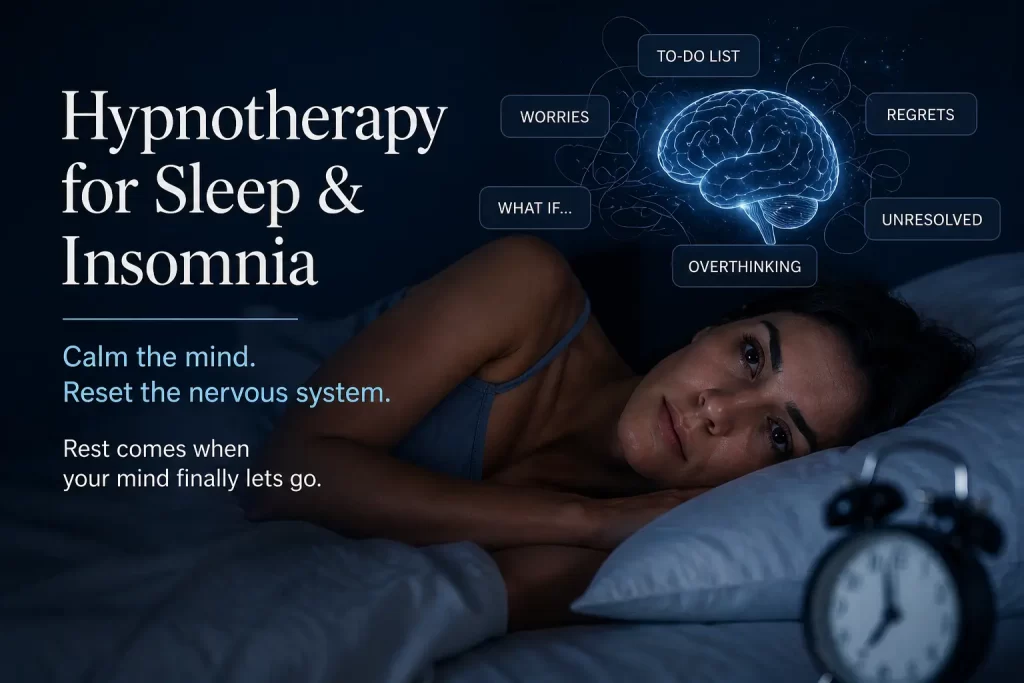
The subconscious mind doesn’t operate on a schedule. It runs continuously, scanning for threats, replaying unresolved emotional files, and predicting what tomorrow might bring. Think of it as a hard drive that keeps processing in the background — it doesn’t automatically shut down because the clock says midnight.
When the nervous system has been in a state of chronic stress, hypervigilance, or unresolved anxiety, it stays in a low-grade alert state even during sleep hours. This isn’t a character flaw or a discipline problem. It’s a survival response that has become miscalibrated.
Common sleep-disrupting patterns stored in the subconscious include:
- Worry loops that replay the same concerns without resolution
- A body that stays physically tense even when you’re lying still
- A startle response or light-sleep pattern rooted in hypervigilance
- Racing thoughts driven by unprocessed emotional backlog from the day
- A nervous system that has learned to associate nighttime with dread
Sleep problems and anxiety hypnotherapy in Fort Lauderdale often address the same subconscious root — because anxiety and insomnia share the same engine: a nervous system stuck in prediction mode.
How Hypnotherapy for Sleep Is Different From Sleep Hygiene
Sleep hygiene advice addresses the environment and behaviors around sleep. Hypnotherapy addresses the nervous system state beneath them.
In a hypnotherapy session, the goal isn’t relaxation for its own sake — it’s accessing the subconscious layer where the sleep-disrupting pattern is stored. In a calm, focused state (not unconscious — more like the absorbed attention you feel when a film pulls you completely in), the nervous system becomes receptive to repatterning.
The work typically involves:
- Identifying the emotional content keeping the nervous system activated at night
- Tracing the pattern to its origin — often anxiety, unresolved stress, or early experiences of hypervigilance
- Updating the subconscious’s threat assessment so rest is no longer overridden
- Installing a new sleep-entry response that the body can learn and repeat
Who This Helps Most
This approach tends to be most effective for people whose sleep issues are tied to:
- Generalized anxiety or constant low-level worry
- A history of stress or emotional overwhelm that the body hasn’t fully processed
- Trauma-adjacent patterns — hypervigilance, light sleep, waking at the same time each night
- Life transitions — career pressure, relationship stress, major change
- A sense that the mind “won’t turn off” regardless of how tired the body is
For clients dealing with sleep disruption tied to past experiences or stored emotional weight, this work often connects naturally with trauma-informed hypnotherapy. The subconscious doesn’t always distinguish between what we label anxiety and what we label trauma — both can present as a nervous system unable to trust rest.
Sessions are available in-person in Fort Lauderdale and virtually for clients across Broward County. Many clients in Hollywood, FL and Pompano Beach choose virtual sessions — hypnosis is an internal state, and it travels.
What a Sleep-Focused Session Looks Like
Your session begins with a conversation rather than small talk. We explore the specifics of your sleep: the timing of disruptions, your actual experiences, and the thoughts that emerge during wakefulness. This dialogue allows us to map your unique patterns, ensuring the subsequent subconscious work is targeted specifically to you rather than being generic.
Following our discussion, you are led through a calm, guided induction. This is a focused inward shift where you remain fully aware, devoid of anything theatrical or dramatic. At this stage, the work addresses the roots of sleep disruption: the body’s alert state, subconscious beliefs, and any emotional backlog that may be present.
To conclude, the session ends with grounding and positive suggestions tailored to your individual pattern. You leave with a sense of increased calm—not through a temporary hypnotic effect, but because the underlying “system” driving your sleep patterns has actually been updated.
Frequently Asked Questions
Can hypnotherapy cure insomnia?
Hypnotherapy doesn’t “cure” insomnia in the way a medication might — but it can address the root nervous system patterns driving it. Many clients experience lasting improvement in sleep quality once the subconscious alarm state is recalibrated. The goal is a nervous system that no longer overrides rest, not a quick fix that masks symptoms.
How many sessions does it take to improve sleep?
It depends on how long the pattern has been present and what’s driving it. Some people notice meaningful shifts within 2–3 sessions. Deeper patterns tied to anxiety or unresolved emotional experience may take longer. After an initial conversation, a realistic plan is mapped based on your specific situation.
Is hypnotherapy for sleep safe?
Yes. Hypnotherapy is non-invasive, drug-free, and conducted in a fully supported state. You remain aware and in control throughout. Nothing is forced. The process is paced to your nervous system’s readiness.
Can virtual hypnotherapy sessions help with sleep?
Yes — and many people find them more effective because you’re already in your own sleep environment. The session can calibrate directly to the space where sleep actually happens. Virtual sessions serve clients across South Florida, including Hollywood, Pompano Beach, and beyond.
What if my insomnia is connected to anxiety or stress?
That’s very common — and it actually makes hypnotherapy a strong fit, because both the anxiety and the sleep disruption are driven by the same subconscious nervous system pattern. Addressing one tends to improve the other.