
Hypnotherapy for Sleep & Insomnia
If you live in Fort Lauderdale and you’re reading this at 2 a.m., you already know the loop: your body is exhausted, but your mind will not switch off. As both a Medical Doctor and a certified hypnotherapist, I work with people every week who have tried everything — better sleep hygiene, melatonin, sometimes prescription sleep aids — and still lie awake watching the ceiling. Hypnotherapy for insomnia takes a different route: instead of forcing sleep, it teaches you how to gain control of your mind and ease yourself into natural sleep. You can see the full range of what I treat on my conditions I support page, or book a phone consult whenever you’re ready.
Why Your Mind Will Not Switch Off
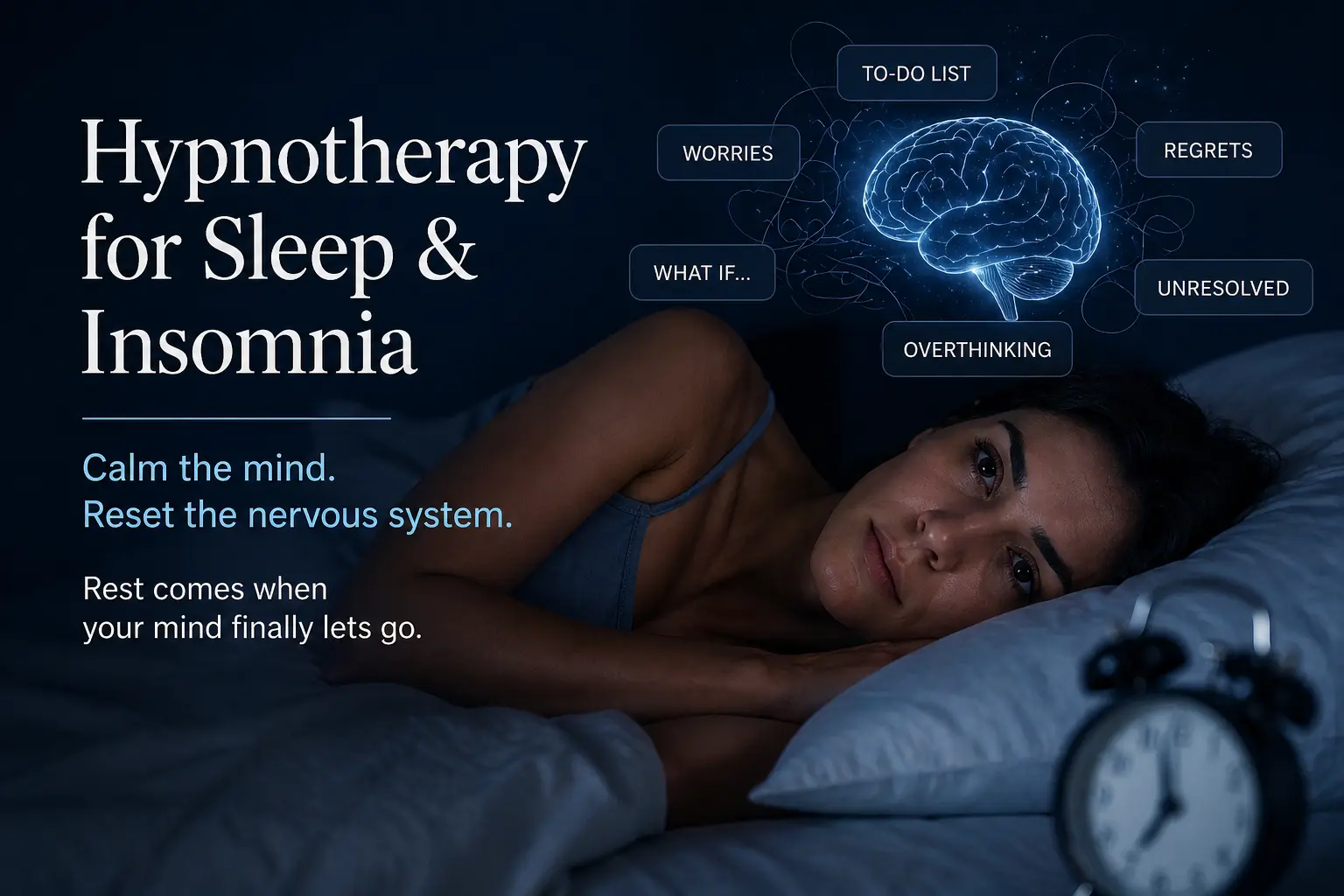
Insomnia rarely means you’ve “forgotten how to sleep.” More often, your system has learned to stay alert. Researchers call this hyperarousal — a state where the stress response stays switched on around the clock, not just at bedtime.
In my practice, I often see patients whose racing mind at night is the visible tip of a much larger pattern. The body shows it too: elevated heart rate, a busier-than-normal brain even during the day, and a stress system that keeps firing long after the stressor is gone. According to the National Institutes of Health, chronic insomnia is largely maintained by exactly this kind of cognitive and physiological arousal — a racing mind, fear of another sleepless night, and a body that won’t downshift.
Here’s why this matters: if the real problem is an over-active alarm system, then “trying harder” to sleep only turns the alarm up louder. That’s the trap so many of my Fort Lauderdale clients are caught in — and it’s the exact loop hypnotherapy is designed to interrupt.
Sound familiar? Notice what your mind does the moment your head hits the pillow — that pattern is the doorway we work with.
What Begins to change with hypnotherapy…
- Faster wind-down: First you must catch yourself & take control of your mind.
- Quieter mind: the 2 a.m. mental replay loses its grip as the fear of sleeplessness fades.
- Better associations: bed becomes a place of rest again, not a nightly performance test.
What A Session Looks Like
Your first appointment begins with a consultation — not a script. I want to understand your sleep history, your health, your stress, and what a good night would actually look like for you. Because I’m an MD, I also screen for medical factors that belong with a doctor first (more on that below).
Sessions are available virtually or in person in Fort Lauderdale, and I’ll often teach you a short self-hypnosis technique to use at home, so the calm carries into your own bedroom.

1
Consultation & goals, getting clear about the desired goals and readiness for change
2
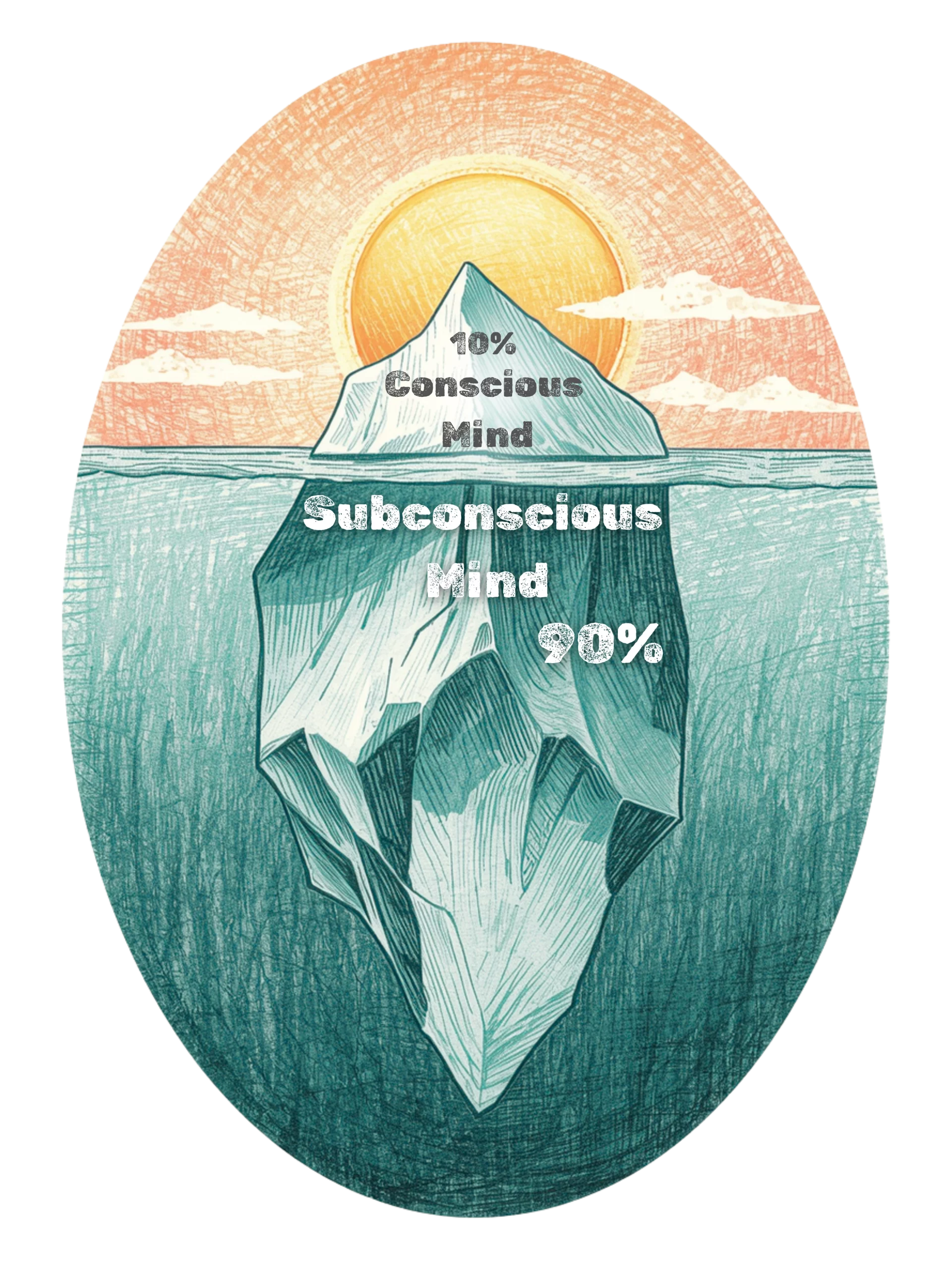
I show you the map of your mind and the plan to get you to go to sleep consistently and more regularly.

3
You then settle into a relaxed yet focused state, hypnosis, that is similar to right before you fall asleep. This will be the sam etechnique us use to call asleep as well.

4
We work directly with the subconscious, unscripted and tailored to you, not read from a generic template. We identify the barrier to sleep.

Closing & Integration
At the end of a session you are fully alert and will remember the session, sometimes the details fade over time like a dream does but the main concepts discussed create notable changes that are felt. You Leave the session with more awareness, more understanding, and more control on what to do next.
For a fuller breakdown, read the complete session walkthrough.
When Insomnia Needs a Doctor First
Hypnotherapy is complementary to medical care — never a substitute for it. Some sleep problems have a medical driver that must be evaluated and treated directly.
Please see your physician (or ask me during your consult) if you notice any of the following:
- Loud snoring, gasping, or pauses in breathing — possible obstructive sleep apnea.
- Insomnia alongside low mood, anxiety, or thoughts of self-harm — this deserves direct clinical support.
- A new sleep problem after starting a medication or with chest pain, palpitations, or breathing trouble.
If any of these apply, that’s not a detour from healing — it’s the safest first step, and I’ll help you take it.
Most Commonly Asked for Questions for Sleep & Insomnia...
Is hypnotherapy for insomnia safe?
Yes. Clinical hypnotherapy is a non-invasive, drug-free approach with an excellent safety profile for most healthy adults. You remain aware and in control throughout, and you can’t be made to do anything against your values. Because I’m also a Medical Doctor, I screen for underlying conditions first to make sure it’s the right fit for you.
Can I do hypnotherapy for sleep online, or only in Fort Lauderdale?
Both. I offer secure virtual sessions as well as in-person appointments in Fort Lauderdale. Hypnotherapy translates well to video because the work is guided and internal — you simply need a quiet, comfortable space where you won’t be interrupted for the length of the session.
How many sessions will I need?
It depends on the issue and your goals. Some athletes notice change after just one or two sessions; others benefit from a short series (3–6 sessions) to reinforce new patterns and strengthen confidence. Together, we’ll tailor a plan that fits your needs.
How many sessions will I need?
It varies. Some clients notice calmer nights within the first one to three sessions, while long-standing insomnia tied to stress or trauma may take longer. During your free consultation I’ll give you a realistic, individualized estimate rather than a one-size-fits-all package — your sleep history and goals shape the plan.
Will I lose control or be “out of it” during hypnosis?
Not at all. You remain fully aware and in control. Hypnosis is a relaxed but focused state — similar to the “zone” athletes already experience when fully immersed in performance. You’ll hear everything and remember what happens.
How long do results last?
Once a subconscious pattern is changed, it often lasts — especially when reinforced with visualization and self-hypnosis techniques you can use between sessions. You’ll learn tools to maintain your mindset for the long term.
Related Conditions I Support
Insomnia rarely travels alone. If your sleepless nights are tangled up with something deeper, these related pages may help:
- Hypnotherapy for chronic pain — when discomfort keeps you awake.
- Hypnotherapy for anxiety — when a racing mind is the real culprit.
- Hypnotherapy for trauma — when your nervous system never learned it was safe to rest.