

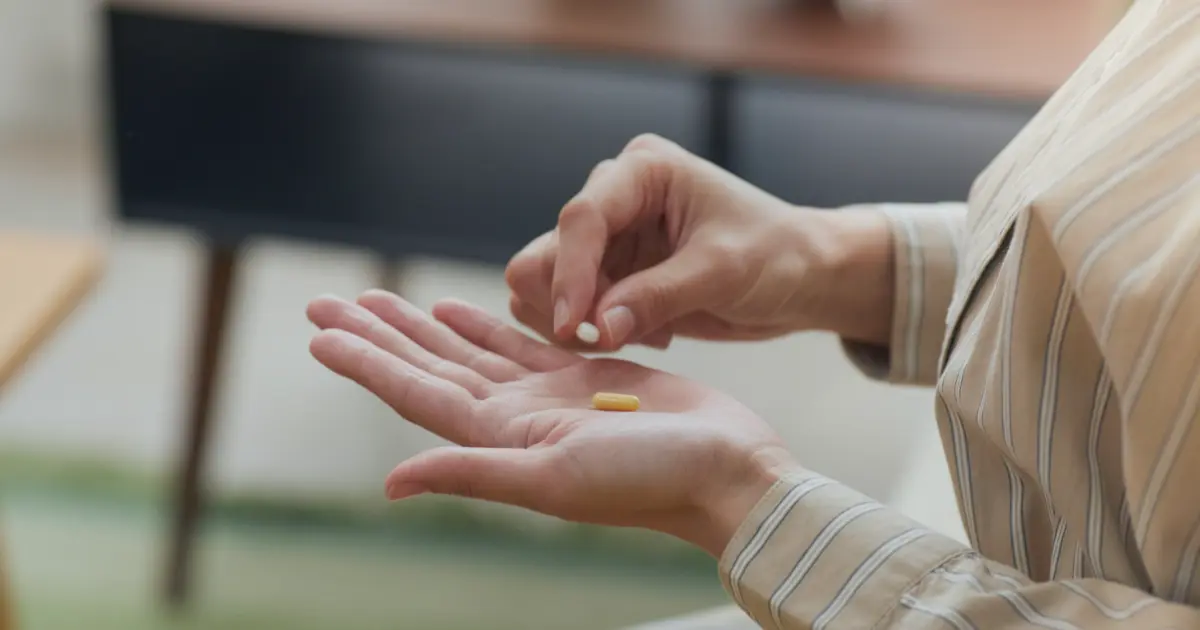

The “chemical imbalance” theory of depression — that low serotonin causes depression and SSRIs restore the balance — was never established science. A landmark 2022 systematic review found no consistent evidence linking low serotonin to depression. The picture that’s emerging instead involves genetics, environment, trauma, and the way experience shapes biology over time. And that picture is actually more hopeful than a broken brain — because what shaped you can be worked with.
If you’ve ever been told your depression is caused by a chemical imbalance in your brain — that your serotonin is low, your brain is deficient, and a pill can fix it — you are not alone.
For decades, this was the story. Doctors told it. But pharmaceutical companies funded it. Television commercials animated it with sad little cells floating through a deficient brain. And most people, desperately trying to understand why they felt so bad, believed it.
I believed it too. I trained in medicine. I spent years working inside the behavioral health system — overseeing clinical operations at residential treatment facilities, watching the medical model applied at scale. What I witnessed, over and over, was patients arriving, getting diagnosed, getting medicated, and cycling back through the same doors months later. Still suffering. Still stuck.
What I didn’t fully understand then, and what science is now catching up to confirm: the chemical imbalance story was never actually the whole picture.
The Story We Were All Told
The serotonin hypothesis of depression was first proposed in 1965 by Harvard psychiatrist Joseph Schildkraut, who suggested that low levels of certain neurotransmitters might be linked to depression. It was always a hypothesis — a theoretical starting point, not a proven finding.
But in the 1980s and 1990s, the hypothesis became a marketing platform. Pharmaceutical companies launching a new class of antidepressants — SSRIs like Prozac, Zoloft, and Paxil — needed a simple, sticky story. “Low serotonin causes depression; our drug raises serotonin” was that story. As research published in 2024 confirms, the chemical imbalance explanation became one of the most widely shared mental health beliefs — spread through classrooms, media, healthcare providers, and direct-to-consumer advertising.
By the time most of us were old enough to ask what depression actually was, the answer was already everywhere: a chemical imbalance in the brain.
It was never what the science said. It was what the marketing said. And there’s a difference.
What the Research Actually Shows
In July 2022, psychiatrist Joanna Moncrieff and colleagues at University College London published a landmark systematic review in the journal Molecular Psychiatry — one of the most comprehensive analyses of the serotonin-depression link ever assembled. Their conclusion: there is no consistent evidence that depression is caused by low serotonin levels or reduced serotonin activity in the brain.
The review examined six major research areas — serotonin levels in body fluids, receptor binding, transporter imaging, tryptophan depletion studies, gene studies, and gene-environment interactions. Not one produced reliable, reproducible evidence of a serotonin deficit in people diagnosed with depression.
It’s worth naming that the paper generated significant scientific debate. Some researchers argued that mainstream psychiatry never formally endorsed the simplified serotonin story as fact — that it was always a lay simplification, not a clinical claim. That debate is real, and the science is ongoing. But what isn’t debated is this: the simplified version — low serotonin causes depression, SSRIs restore the balance — was never what the data showed, and it was never an adequate explanation for something as complex as human suffering.
What this does not mean: that antidepressants never help anyone. They do help some people, and that’s important to say plainly. What it means is that why they help remains more complicated than the story we were given. Also knowing that there is other options may bring light to those that no longer are responding or feel like their antidepressants aren’t working.
What About Genetics? Predisposition Isn’t the Same as Destiny
Here’s something important that often gets lost when we push back on the chemical imbalance theory: genetics do play a role.
Research on twins consistently suggests that depression has a meaningful heritable component — somewhere in the range of 30–40%. That’s real, and it matters. If depression runs in your family, that’s not nothing. Your biology is not a blank slate.
But — and this is the part that changes everything — having a genetic predisposition to depression is not the same as being condemned to it. This is where the science of epigenetics becomes so important.
Epigenetic studies how our experiences and environment change the way genes are expressed. Think of your genes as a vast library of possibilities. Epigenetics determines which books get opened, and which stay on the shelf. The same genetic predisposition can remain dormant in one environment and be activated in another.
This means the question shifts from “do I have the genes for depression?” to “what conditions in my life have been switching those genes on — and what conditions might switch them off?”
That’s not a rhetorical shift. It’s a biological one. And it puts something back in your hands.
So If It’s Not Just a Chemical Imbalance, What Is It?
Depression is not a single thing with a single cause. But the research increasingly points to a common thread: the accumulated experience of living in conditions the human nervous system was not designed to sustain.
Trauma. Chronic stress. Adverse childhood experiences. Persistent isolation. Environments that signal danger — and a nervous system that has learned, over time, to match them.
The brain chemistry changes seen in depression aren’t the origin of the problem. They are the downstream effects of an environment — and often a lifetime of experiences — that have been imprinting on the body. What I’ve come to think of as an environmental imbalance that leads to a chemical one.
The chemicals change naturally, But what changed them? That’s the more honest question.
It is no surprise that when we get stressed either it be from working out or even trying to meet a deadline that cortisol elevates in the body, this has been tested and shown, so how can this response not be different to depression?

The Environmental Imbalance: What’s Actually Driving Depression
The research on adverse childhood experiences (ACEs) makes this concrete. Decades of data show that the number of adverse experiences a person accumulates in childhood — abuse, neglect, household dysfunction, loss — directly predicts their risk of depression, anxiety, and chronic illness as an adult. People with four or more ACEs are more than twice as likely to develop depression.
This is not psychology operating separately from biology. This is biology.
Chronic stress activates the body’s HPA axis — the stress-response system — flooding the system with cortisol over extended periods. That sustained activation changes the brain: it shrinks the hippocampus (critical for memory and emotional regulation), dampens prefrontal cortex function (the seat of judgment and self-regulation), and shifts the entire nervous system toward chronic hypervigilance.
Social and structural factors leave the same marks. A major 2024 review in World Psychiatry confirmed that poverty, discrimination, chronic loneliness, and lack of safety are cumulative, measurable risk factors for depression — ones that alter brain structure through the same biological pathways as direct trauma.
The biopsychosocial model — biology, psychology, and environment in constant conversation — is far closer to the truth than any single chemical can be.
How Environment Rewrites Your Biology: The Epigenetics Link
Back to genetics — and why this actually matters for healing.
Research has shown that early life stress causes methylation changes to the NR3C1 gene — the gene that regulates cortisol sensitivity. The body’s stress-response system gets rewritten at the molecular level. Someone who experienced significant early adversity may literally respond to stress differently, not because they’re broken, but because their environment wrote new instructions into their biology.
The same mechanism works in the other direction. Research on stress-related psychiatric disorders confirms that epigenetic changes are not permanent — they are responsive. Healing environments, relational safety, and approaches that work at the level of the nervous system and subconscious can begin to shift those biological patterns over time.
This is what neuroplasticity actually means in practice. Not just “the brain can change” as a motivational slogan — but that the same biology that was shaped by your past can be gradually, measurably reshaped by what you do next.
(Part 2 of this series goes much deeper on epigenetics, gene expression, and what this means for healing in practical terms.)
If Your Antidepressants Aren’t Working — Or Are Making You Feel Numb
I want to speak directly to something I hear constantly, and have heard for years both inside the medical system and in my practice: “My medication isn’t working anymore.” Or: “I don’t even know if it’s helping — I just feel flat. Like I’m not really here.”
That experience is real and it is worth taking seriously.
Here is one way of understanding it through the lens of everything above: antidepressants work downstream. They act on the brain chemistry that has already been altered by experience. For some people, that’s enough — it lifts the floor just enough for other healing to become possible such as therapy. For others, managing the neurochemistry without addressing what generated it in the first place means the underlying environment — the stored stress, the unprocessed experiences, the patterns running beneath the surface — keeps producing the same downstream effects.
This is not a failure of your brain. It may be a signal that the treatment hasn’t reached far enough back.
I am not suggesting anyone stop or change their medication without working closely with their doctor. That is not what I’m saying. What I am saying is that if you are doing everything you’ve been told to do and something still feels unreached — you are probably right. Something is unreached. And it likely lives upstream or above and before the chemistry itself.
What This Means for Getting Better
The most important shift I can offer from all of this is not a new theory. It’s a reframe.
You are not broken. You are not chemically defective. You are someone whose biology has been shaped — by your genes, yes, and far more by your environment, your experiences, your nervous system’s learned responses to what it has lived through. And because that’s what shaped you, it’s also what healing can reach.
The question worth asking isn’t “what’s wrong with my brain chemistry?” It’s: what happened to me, and where does my nervous system still believe is happening?
That question takes you somewhere the chemical imbalance story never could. It takes you beneath the symptom, toward the source — toward the subconscious patterns and stored experiences that talk therapy often circles without quite landing in.
This is not about blame. Not about your childhood, not about your parents, not about the life you’ve lived. It’s about understanding that your body has been trying to adapt — and that adaptation, however painful it’s become, can be worked with.
This is why I personally left conventional medicine and do the work I do today, because of my own search for answers in feeling better and exhausting both medications and the conventional route. So know there are alternative options out there that can help me feel better.
Frequently Asked Questions
Is depression caused by a chemical imbalance in the brain?
The evidence doesn’t support the simplified version of this claim. A comprehensive 2022 review found no consistent link between low serotonin and depression. Depression involves biological, genetic, psychological, and environmental factors that interact over time — not a single chemical deficiency.
Does genetics play a role in depression?
Yes — research suggests depression has a heritable component of roughly 30–40%. But genetic predisposition is not the same as inevitability. Epigenetics shows us that environment and experience shape which genes get expressed, meaning a predisposition can remain dormant or be activated depending on life conditions. This is actually empowering: it means environment matters, and environment can change.
What should I do if my antidepressants aren’t working?
Talk with your prescribing doctor — do not change or stop medication without medical guidance. And know that if something still feels unreached, you may be right. Medication addresses downstream chemistry; it doesn’t always reach the environmental or subconscious roots that drove the chemistry in the first place. Additional approaches — including trauma-focused therapy, nervous system work, and subconscious-level healing — may address what medication alone cannot.
Can Hypnotherapy Health Me with my depression?
Hypnotherapy is not a regulated area of practice but when you work with a trained and accredited professional who is trauma informed and trained in working with depression YES it can help. As an alternative or even working in conjunction to conventional or talk therapy. To learn more feel free to contact Dr. Ann Marie Balkanski
If something in this resonated — join email list below.