



When comparing holistic therapies for mental health — meditation, acupuncture, somatic work, yoga, breathwork — the key question isn’t which one is best. It’s which one addresses the level where your specific pattern actually lives. Most holistic approaches work with the nervous system from the outside in: they regulate, ground, and calm. Hypnotherapy works from the inside out: it accesses the subconscious directly, where the pattern was formed and where it’s being maintained. For anxiety, trauma, and emotional patterns that haven’t shifted despite other approaches, this distinction matters.
If you have explored holistic options like meditation, acupuncture, or somatic therapy, you likely seek more than a simple ranking. You want to understand where hypnotherapy fits and why it might resolve persistent anxiety or trauma patterns that other methods haven’t shifted.
This post examines the specific mechanics of hypnotherapy. Rather than a competition, it is about matching your chosen method to the depth where your patterns actually reside.

The Core Distinction: Where Each Approach Works
Most holistic therapies work with the nervous system from the outside in. They regulate the body, create calm, reduce activation, and build resilience. This is genuinely useful — especially for stress management, maintenance, and grounding. The limitation is that regulation doesn’t automatically resolve the subconscious programs driving the dysregulation. You can calm the system and still have the same patterns fire the next day.
Hypnotherapy works differently. Instead of calming the system from the outside, it accesses the subconscious level where the pattern is stored — and changes the file. The hard-drive metaphor is apt here: other holistic approaches often help the system run cooler, which matters. Hypnotherapy finds the program running in the background and rewrites it.
Neither approach is wrong. But they operate at different depths. Understanding which one fits your situation is the useful question.
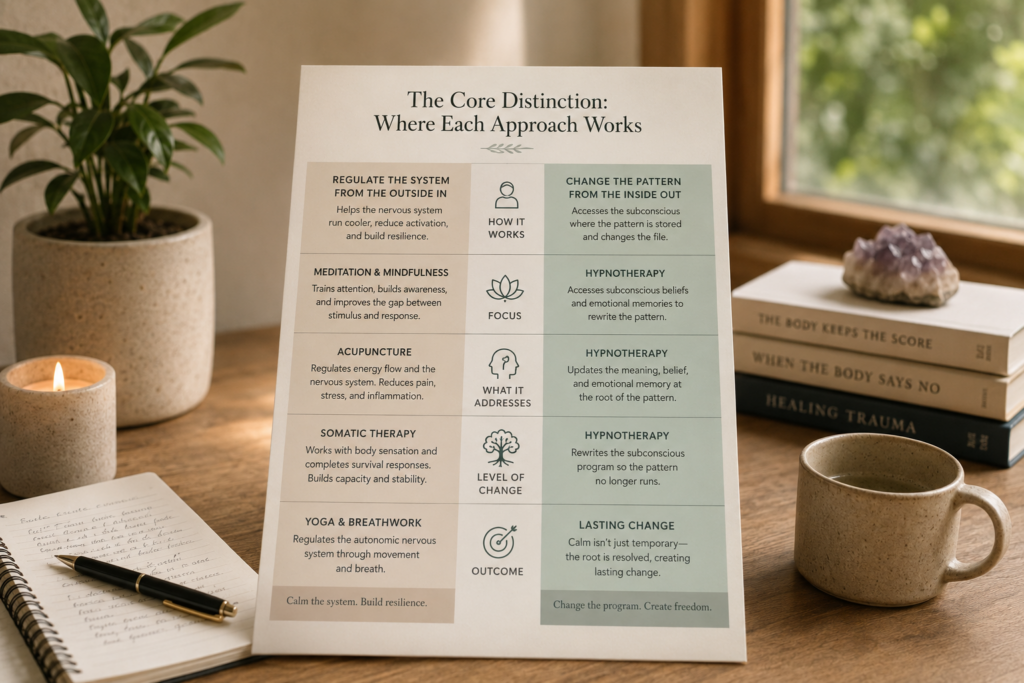
Meditation and Mindfulness
Meditation trains present-moment attention and nervous system regulation. Regular practice reduces cortisol, builds emotional resilience, and improves the gap between stimulus and response. For stress management and daily maintenance, it’s evidence-based and well-researched.
Where it reaches a limit: meditation works at the level of conscious observation. You can notice an anxious thought, label it, and return to breath. What it doesn’t do is change the subconscious belief or emotional memory that generated the anxious thought. If the same trigger keeps producing the same internal response despite years of practice, the source is below what mindfulness can reach.
Hypnotherapy and meditation are not opposites — they can complement each other well. The difference is that meditation builds awareness of what’s running; hypnotherapy changes what’s running.
Acupuncture
Acupuncture works through the nervous system and meridian system to regulate energy flow, reduce inflammation, and shift physiological states. Research supports its effectiveness for chronic pain, stress, and certain anxiety presentations. Many people find it produces noticeable relief, particularly for somatic symptoms — tension, sleep disruption, digestive responses to stress.
The limitation for psychological patterns: acupuncture doesn’t engage the emotional memory or subconscious belief system directly. It can regulate the body’s response to a trigger without updating what the trigger means or where it came from. For physical stress expression, acupuncture can be excellent. For patterns rooted in emotional memory, subconscious hypnotherapy reaches something acupuncture doesn’t.
Somatic Therapy
Somatic therapy is probably the closest holistic neighbor to hypnotherapy. It works with the body’s felt sense — tracking physical sensation, noticing where stress or trauma is held, completing interrupted survival responses. If you’ve read the somatic vs. psychosomatic comparison already on this site, you’ll recognize the framework: somatic work is often the right starting point when the nervous system needs stabilization before deeper processing.
Somatic therapy’s limitation is the same as mindfulness: it works with the sensation and the body’s expression of the pattern, but it doesn’t always access the subconscious belief system or emotional memory underneath. For clients who are already regulated — who have safety, grounding skills, and nervous system stability — hypnotherapy can access the root of what somatic work was helping them manage.
Many clients benefit from a sequence: somatic stabilization first, then subconscious depth work. The two are complementary, not competing.
Yoga and Breathwork
Yoga and breathwork regulate the autonomic nervous system through movement and breath. Longer exhales activate the parasympathetic system. Physical movement discharges stored stress hormones. These are real physiological mechanisms, not placebo. For general wellbeing and daily regulation, both are well-supported.
The limitation is similar: regulation without resolution. A person with deep anxiety or unresolved emotional patterns can practice yoga consistently and still find the patterns intact. The nervous system has been calmed; the subconscious file hasn’t been updated.
Where Hypnotherapy Fits and When It’s the Right Choice
Hypnotherapy is the right fit when the pattern has persisted despite surface-level regulation, when insight exists but doesn’t produce change, when the pattern feels below the level of conscious control, and when the goal is resolution rather than management.
For anxiety that keeps returning despite coping tools, hypnotherapy for anxiety reaches the subconscious trigger keeping the nervous system on alert — the original experience or belief that the body is still responding to.
For trauma responses that persist despite understanding what happened, trauma-informed hypnotherapy works with the implicit memory — the nervous system’s stored version of the event — without requiring full graphic re-exposure.
Hypnotherapy is not a replacement for every holistic tool. Meditation, somatic work, breathwork, and movement all have a place. But when those tools feel like maintenance rather than resolution — when you keep managing the same loop rather than exiting it — hypnotherapy addresses the level below them.
In-person sessions are available in Fort Lauderdale. Virtual sessions serve clients across South Florida, including in Coral Springs and Boca Raton — the subconscious doesn’t need a specific zip code to do the work.
Frequently Asked Questions
Is hypnotherapy better than meditation for anxiety?
They work at different levels. Meditation builds the capacity to observe and regulate. Hypnotherapy changes the subconscious program that keeps generating the anxiety in the first place. For many people, both are valuable — but if meditation isn’t producing lasting change, the source is likely below what it can reach.
Can I combine hypnotherapy with other holistic therapies?
Yes — and many clients do. Somatic work, meditation, and yoga can all complement hypnotherapy well. They support nervous system regulation between sessions, which actually improves the conditions for deeper subconscious work. The approaches are not mutually exclusive.
How does hypnotherapy compare to EMDR?
Both approaches work with subconscious processing — EMDR uses bilateral stimulation to help the nervous system reprocess traumatic memories, while hypnotherapy creates a calm internal state where the subconscious can be accessed and updated directly. Some clients have worked with both and found hypnotherapy more accessible because it doesn’t require graphic exposure to the traumatic content. A realistic assessment of which fits your situation is best discussed in an initial consultation.
Is holistic hypnotherapy evidence-based?
Yes. Hypnotherapy has a substantial research base, particularly for anxiety, pain management, and trauma-related presentations. Meta-analyses support its effectiveness, and clinical hypnotherapy organizations maintain rigorous training and ethics standards. Ann Marie’s medical background and 600+ hours of clinical training reflect that standard.
What if I’ve tried several holistic approaches and nothing has fully worked?
That’s actually the most common starting point for new clients. Having tried meditation, therapy, somatic work, or other approaches without full resolution usually means the pattern is rooted below what those methods access. Hypnotherapy is specifically designed for that gap — the level where conscious effort and surface regulation stop, and subconscious programming begins.
Schedule a virtual or in-person hypnotherapy session in Fort Lauderdale today.