


There’s something about a solo road trip I find so appealing. In a way it feels like an excuse, or maybe permission, for me to sit with myself in such an intimate and uninterrupted way. Not like a vacation. Not like when I sit on my meditation cushion or in a quiet room.
It’s the open road, the changing terrain rolling past you, the sky stretching wider than any problem can hold, and the complete, uninterrupted solitude of being alone with yourself for hours on end.
I love it, so I do it a few times a year mainly to see family in Georgia.
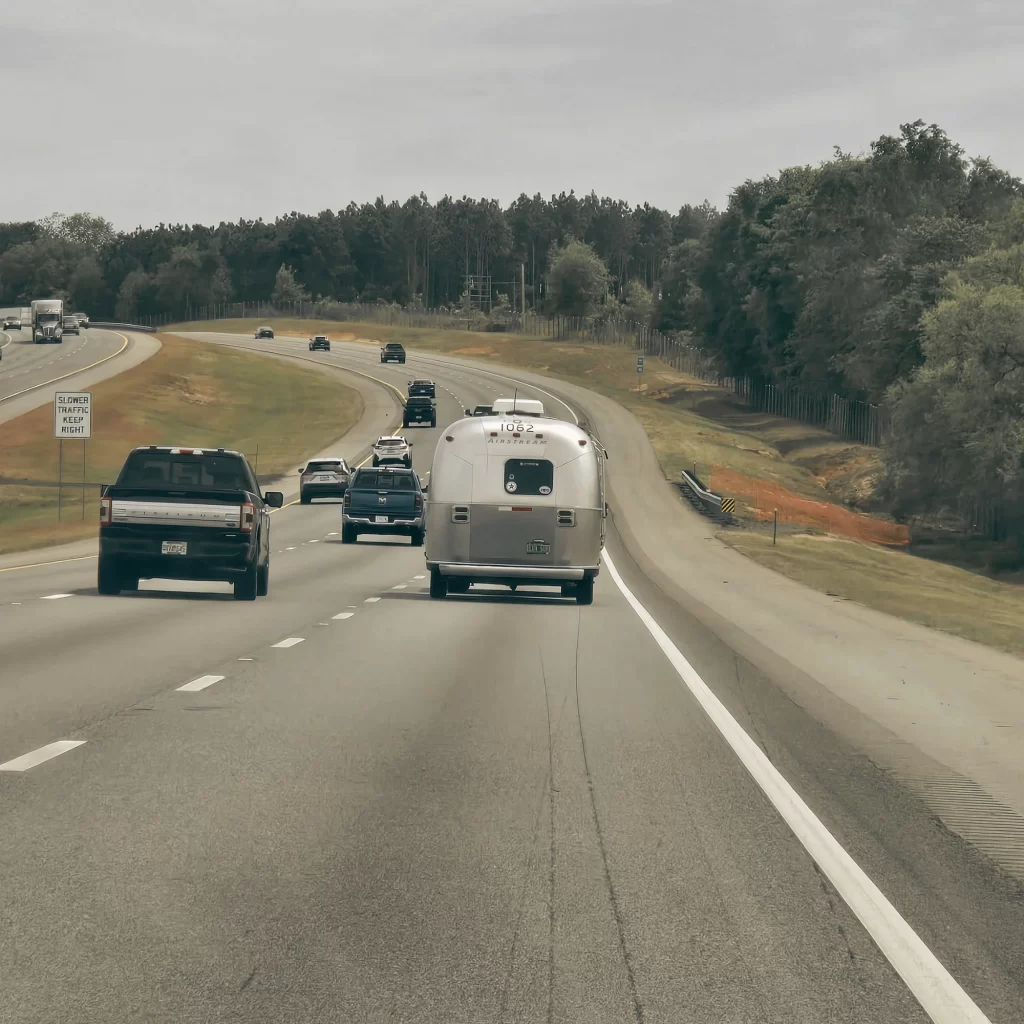
There’s something sacred about it, actually. The way you settle into the driver’s seat and slowly, mile by mile, I fall into a trance. But it is a literal trance. I have had some of my biggest epiphanies on the road, where my body doesn’t need to do anything and my mind has the free range to wander as the little details of the landscape catch my eyes.
And then something happens that most people don’t talk about but nearly every long distance driver has experienced: you fall into that trance I was referring to.
Highway Hypnosis Is Real, and It’s Fascinating
It’s called highway hypnosis, sometimes known as “white line fever,” and it’s a documented psychological phenomenon. It’s that altered mental state where you’re driving, you’re operating the vehicle completely safely, and yet your conscious mind has gone somewhere else entirely. You arrive at your destination or suddenly snap back to awareness and think, wait, how did I get here? I don’t remember the last thirty miles.
Your brain has essentially split its attention. One stream of consciousness handles the mechanical task of driving (steering, braking, adjusting speed) while another dives deep into thought, memory, imagination, or emotion. It’s a manifestation of what psychologists call automaticity: the brain’s ability to perform complex, well practiced tasks without conscious oversight. Think of it like riding a bike or tying your shoes. Driving, for experienced drivers, becomes so deeply rehearsed that it can run on a kind of sophisticated autopilot.
Highway hypnosis tends to happen on long, monotonous stretches of road, the kind with few turns, consistent speed, and repetitive and gradual scenery. The visual sameness lulls your brain’s alertness system, and your attention turns inward.
Now, most articles about highway hypnosis warn you about it. They tell you it’s dangerous. They tell you to chew gum or roll the windows down.
But as a hypnotherapist? This is my jam!
Because what’s really happening in that state isn’t nothing. It’s the opposite. When your conscious mind quiets down and your subconscious takes the wheel, both literally and figuratively, that’s when the real stuff comes through. The things you’ve been too busy to feel. The truths you’ve been too productive to hear.
The Trip
The drive I’m talking about was a family trip, one I make regularly, ten hours one way. Nothing unusual about it. But on this particular stretch, with plenty of time and no agenda, I decided to just… listen. No podcast queue. No mental to do list to work through. I simply wanted to know: what wants to come through?
I had thoughts about my own thoughts for a while during my drive, you know? the one that is almost constantly narrating and questioning everything and can be so active and even obsessive at times. I simply watched my conscious mind wander everywhere. Obviously this became exhausting and I wanted something with more substance, I wanted to really sit and know myself more. So I shifted my attention like I would do in guiding someone in a session and said to myself – “Ok, what wants to come up from deeper within me, what do I need to hear right now” creating an open space in me of curiosity holding while holding my analytical mind aside.
And what came up surprised me.
It wasn’t a revelation about my business. It wasn’t a breakthrough about some problem I’d been solving. It was something that, honestly, I should have expected, because it’s the very thing I witness again and again when I work with clients. Something so powerful it humbles me every single time.
It was my inner child creeping up.
What Is the Inner Child, Really?
If you’ve spent any time in therapy, self help spaces, or even scrolling through social media, you’ve probably heard the term inner child. But let me give it some context, because it’s deeper than a trending hashtag.
The concept traces back to the early twentieth century and the work of Swiss psychiatrist Carl Jung. Jung introduced the idea of the “child archetype,” a universal psychological symbol representing innocence, vulnerability, and untapped potential. He saw it as part of what he called individuation, the process of integrating the different layers of our psyche into a whole, functioning self.
By the 1950s, the idea evolved through transactional analysis, something I largely use in my practice, which proposed that we all carry within us three ego states (a child self, a parent self, and an adult self) and that we shift between them constantly in our relationships and reactions. Then in the 1990s, counselor John Bradshaw brought the concept into mainstream consciousness with his work on the “wounded inner child,” arguing that unresolved childhood experiences leave lasting imprints on how we think, feel, and behave as adults. I completely agree, or I would not be here, or even writing this.
Today, the inner child is understood as the part of you that carries all the emotional memories, learned beliefs, and unprocessed experiences from childhood. It is the creative part. The innocent part. The aspect of you that simply wants to feel good, to play, to be safe.
But here’s the part that I think matters most, the part I’ve come to understand deeply in my own work: the inner child doesn’t just hold your joy. It also holds your wounds. Young aspects of us, what I think of as frozen or they get stuck in moments where they didn’t know how to process or release certain energies or experiences that happen. And it doesn’t take something catastrophic. The most ordinary moments can freeze a child in place: a dismissive comment from a caregiver, a feeling of not being heard, a moment of shame that had nowhere to go.
These frozen parts don’t disappear when we grow up. They live in us. They influence our adult decisions, our reactions, our patterns. And they are quietly waiting to be heard.
I also believe (and this part is important) that inner child work is not a one time event. It is a constant integration. A lifelong practice of remembering that we will always carry a young self within us, because that child is us. They don’t graduate. They don’t age out. They stay and ideally blend into our life free to explore and be fully seen or felt.
Don’t Worry, Be Happy
So there I am. Driving. Miles of highway ahead of me. And I ask, gently, like you might knock on the door of someone sleeping: what needs to come up?
And immediately, immediately, a song dropped into my mind.
Don’t Worry, Be Happy.
That old Bobby McFerrin classic. The one with the whistling. The one that makes you sway even when you’re sitting still.
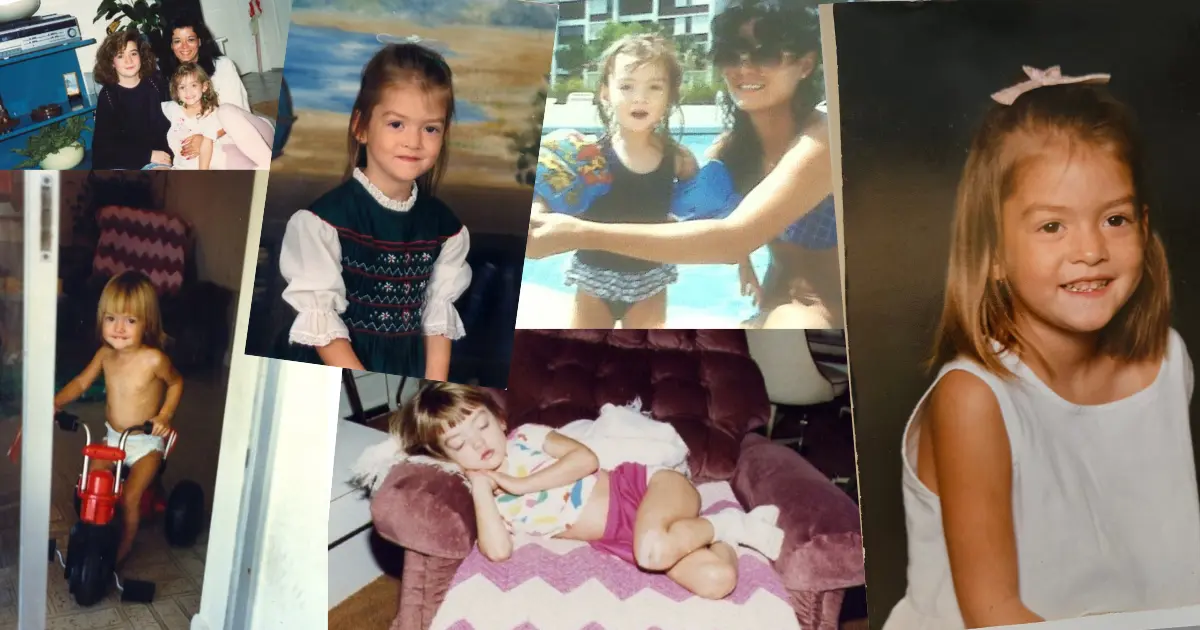
I hadn’t thought about this song in years. But I knew it instantly as hers. My inner child’s song. A song I loved as a kid, one of those tracks that just lived in my bones during my middle childhood years (ages five through eight). Bright, simple, and full of an ease that felt like sunshine and a tree swaying in the wind.
I turned it on. Full blast. Highway stretching out in front of me.
And I could not hold it together.
I sang along, or I tried to, as an overwhelming wave of sensation moved through me. It was everything at once: gratitude, happiness, grief, sadness, joy, relief. I cried. I could barely get the words out. Thank god I was alone in my car!
How fitting was that song. How fitting was that message. How fitting that she, my inner child, chose that moment to remind me: Don’t worry. Be happy. Things will be okay.
Because my adult self forgets this. She hustles. She grinds. She carries the weight of everything she thinks she needs to do even healing. The bills, the business, the responsibilities, the showing up for everyone else. And somewhere in all that doing, she loses the thing that my inner child has never once forgotten: that life is also a place to play. To create. To sing along at full volume and not care what it sounds like.
For me, my biggest life’s lessons has always been finding the balance between effort and ease. There is so much pressure like a collective trauma of needing to do, to be productive, to work, to earn, to provide, to perform, and we forget that we also need to sing. And dance. And play. To not worry, be happy – stop taking things so seriously.
Those things aren’t luxuries. They’re necessities on how we are meant to live life.
The Girl Who Yelled at a Litterer
My inner child? She is wild in a non-conventional sense. And the older I get, the more I embrace her and feel at home because of it.
A memory that grasp the full essence of who my inner child is: Being roughly five years old, just getting out of the car and walking towards the entrance of Walgreens (drug store) with my mom, there was a man parked with trash filling up in his car, slurping on the last bit of his soda from a styrofoam cup. He threw it out the window at the exact moment I was trailing slightly behind my mom, and passing him. “What is wrong with you! You don’t litter!” I screamed.
I lost it.
Full five year old fury. My mother, mortified, shrieking, pulling me by my arm, was terrified the man (who did not appear particularly friendly) would get out of his car and do something. She was panicked. Embarrassed.
But looking back, I see her reaction so clearly for what it was: her own traumas projecting onto my free spirited expression of what was clearly right vs wrong. My five years old self knew the earth wasn’t your trash can. And I had absolutely no filter about saying so.
That little girl has already given me so much. Her fire. Her clarity. Her refusal to be quiet when something matters and to fully revel in nature that had give her so much peace in a chaotic life.
Between the ages of eight and eleven was when everything shut her down. When I entered into foster care and when life became unmanageable, living from home to home, place to place, not knowing where my next meal would come from until I was finally placed.
How the Inner Child Shows Up (Even When You Don’t Realize It)
Here’s what I want you to sit with: the inner child isn’t just some concept you explore in a therapy session once and move on from. It shows up, constantly, in your everyday life.
Have you ever binge watched an entire TV series in one sitting? Eaten a whole tub of ice cream without really tasting it past the third spoonful? Over indulged in a substance? Made a decision without caring at all about the consequences?
That’s your inner child. It’s not being destructive. It’s just doing the only thing it knows how to do: trying to feel good. Trying to soothe something. And maybe, underneath that impulse, it’s asking for help.
The inner child is creative. It is innocent. It is the part of you that wants to experience the world with wonder and lightness. But when it’s scared, or hurt, or when it has quietly taken over your adult life in ways you haven’t noticed, that is when the patterns creep up in ways we don’t know how to get out of. The loops. The self sabotage.
That is why creating space to listen is so important. And if you don’t know how, I am happy to support you.
The Invitation
If your inner child feels distant, or if it feels too present in ways that overwhelm you, the work begins with simply making room for that voice. Sit with it. Ask what it needs. Let it play a song, throw a tantrum, cry in the car on the highway. Let it remind you of things your adult mind has filed away as impractical or unproductive.
And if that feels like too much to do alone, find someone who knows how to hold that space with you. (Wink.)
I remind myself, often, to see the world through my inner child’s eyes. Because that part of me is always there. It never left.
It just needed me to turn on the song.
I have a guided inner child meditation available on Insight Timer if you’d like to explore this work yourself. I’m also here if you need support. You don’t have to do this alone.