
What is trauma?
Trauma isn’t just about life-threatening events or catastrophic experiences. It’s any experience that overwhelms your ability to cope, leaving a lasting imprint on your nervous system and sense of safety. Whether it’s a single devastating incident or the accumulation of smaller stressors over time, trauma changes how we perceive ourselves and the world around us.
Here in Fort Lauderdale, we’ve witnessed our community navigate collective trauma through hurricanes, the stress of relocation, and the everyday challenges that can chip away at our sense of stability. Understanding what trauma really is and recognizing its many forms is the first step toward healing from it.
The Difference Between Big T and Little t Trauma
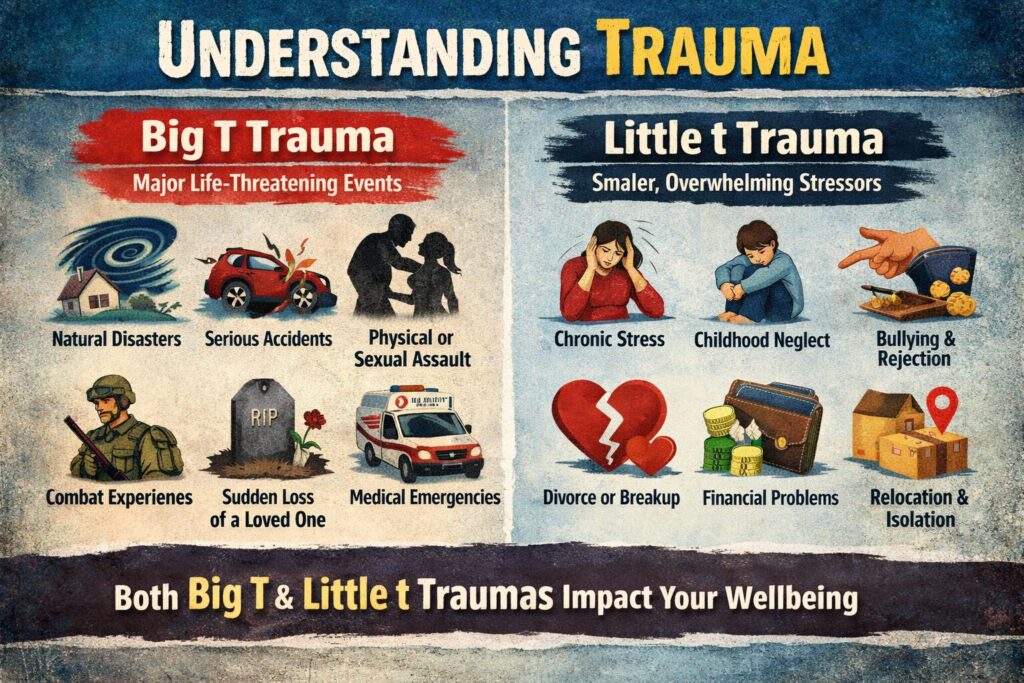
Mental health professionals often distinguish between two categories of trauma: “Big T” and “little t.” Both are valid, both impact your wellbeing, and both deserve attention and healing.
Big T Trauma refers to single-event incidents that are objectively life-threatening or physically harmful. These are the experiences most people traditionally think of when they hear the word “trauma”:
- Natural disasters like hurricanes or floods
- Serious accidents or injuries
- Physical or sexual assault
- Combat experiences
- Sudden loss of a loved one
- Medical emergencies or life-threatening illnesses
These events overwhelm the nervous system in intense, undeniable ways. They often lead to diagnoses like Post-Traumatic Stress Disorder (PTSD) and can create profound shifts in how someone moves through the world.
Little t trauma, on the other hand, encompasses experiences that may seem less dramatic but are nonetheless deeply impactful. These are the events that others might minimize or dismiss, yet they leave real emotional wounds:
- Chronic stress from work or relationships
- Emotional neglect or invalidation during childhood
- Being bullied or excluded
- A difficult divorce or breakup
- Financial instability or job loss
- Relocation stress and loss of community
- Ongoing microaggressions or discrimination
- Medical procedures or chronic illness
Little t traumas are often cumulative. One difficult conversation with a parent might not create lasting impact, but years of emotional dismissal can. The stress of one hurricane evacuation may be manageable, but repeated displacement can create a chronic sense of unsafety.
What makes little t trauma particularly challenging is that people often don’t recognize it as trauma at all. You might think, “Other people have it worse,” or “I should just be over this by now.” But your nervous system doesn’t compare your experiences to others’. It simply responds to what feels overwhelming to you.
How Trauma Gets Stored in the Body
One of the most important things to understand about trauma is that it’s not just a psychological experience — it’s a physiological one. When something overwhelming happens, your body’s stress response activates: your heart races, your muscles tense, your breathing becomes shallow. This is your survival system doing exactly what it’s designed to do.
But when trauma occurs, this stress response doesn’t always complete its natural cycle. The energy meant to help you fight or flee can get “stuck” in your nervous system. This is why trauma survivors often experience:
- Chronic muscle tension, especially in the neck, shoulders, and jaw
- Digestive issues or stomach problems
- Sleep disturbances and nightmares
- Hypervigilance or feeling constantly “on edge”
- Difficulty relaxing or feeling safe
- Unexplained pain or physical symptoms
- Disconnection from the body or feeling numb
Your body remembers what your mind tries to forget. This is why traditional talk therapy alone isn’t always sufficient for trauma healing. We need approaches that address both the psychological and physiological aspects of trauma — ways to help the nervous system complete what it couldn’t during the original experience.
Hypnotherapy offers a unique pathway for this kind of healing. By accessing the subconscious mind in a deeply relaxed state, hypnosis can help reprocess traumatic memories and release the physical tension associated with them. It creates a safe space for your nervous system to finally let go of what it’s been holding.
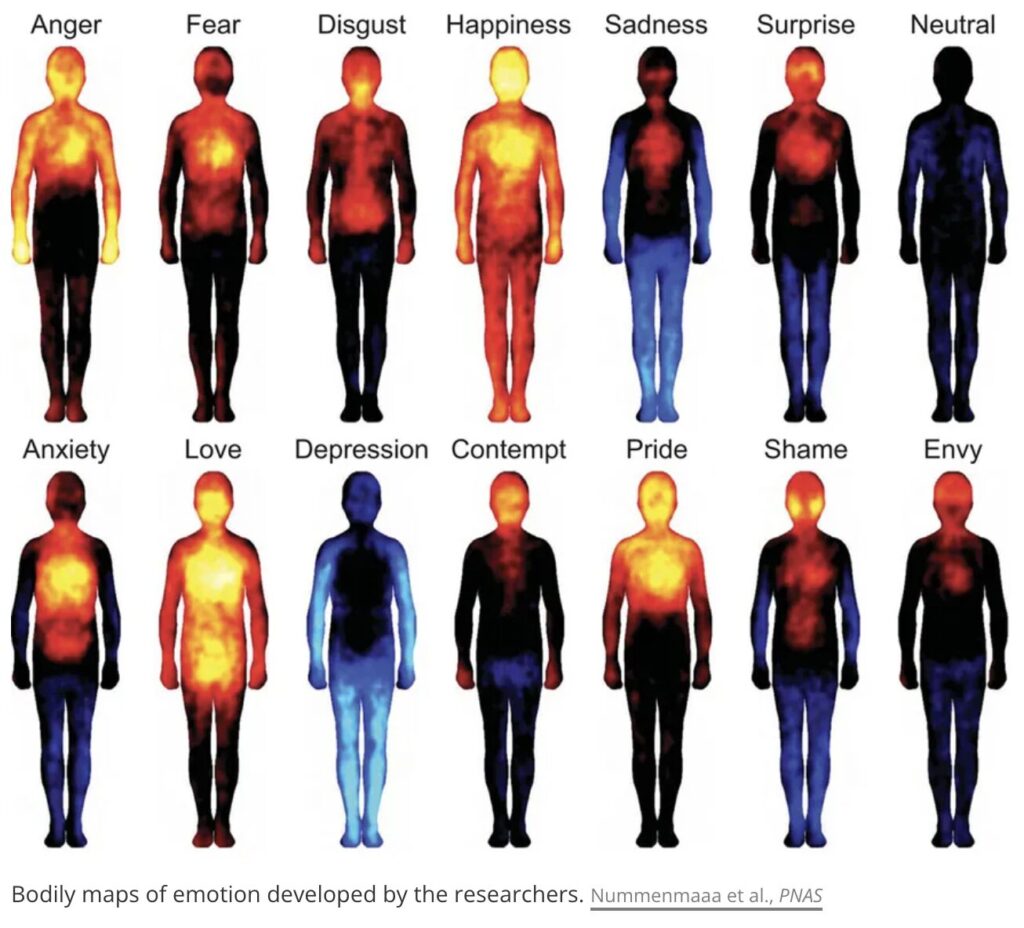
In the the scientific journal Proceedings of the National Academy of Sciences (PNAS) and the image below shows how emotions, either positive or negative are experienced within the body. Triggering events cause a replay or re-lived in the mind and thus in the body where the originating memory is held – “stuck” or not fully healed as evience by the trigger itself.
Fort Lauderdale Resources for Healing
If you’re in the Fort Lauderdale area and recognizing yourself in these descriptions of trauma, please know that healing is possible. Our South Florida community has unique strengths—resilience in the face of storms, adaptability through change, and a culture that values connection and support.
Local resources for trauma recovery include specialized therapists trained in trauma-informed approaches, support groups for specific experiences (hurricane recovery, relocation adjustment, loss), and holistic healing modalities that address the mind-body connection.
Trauma-focused hypnotherapy offers a particularly effective approach for many people. Unlike some therapeutic methods that require you to repeatedly relive painful memories, hypnotherapy allows for gentle reprocessing. You remain in control while accessing the subconscious patterns that keep trauma symptoms active. Many clients find relief more quickly than they expected, often noticing shifts in just a few sessions.
Whether you’re dealing with the aftermath of some major event, processing the stress of relocation, working through childhood experiences, or navigating recent difficulties, you don’t have to carry this weight alone. Fort Lauderdale has compassionate professionals ready to support your journey toward feeling safe in your body and your life again.

Frequently Asked Questions About Trauma and Hypnotherapy
Can hypnotherapy help with PTSD?
Yes, hypnotherapy has shown significant effectiveness in treating PTSD. Research indicates that hypnosis can help reduce PTSD symptoms by allowing the brain to reprocess traumatic memories in a safe, controlled environment. Because hypnotherapy works directly with the subconscious mind where trauma is stored, it can address symptoms like flashbacks, nightmares, and hypervigilance more efficiently than talk therapy alone. Many trauma specialists now incorporate hypnotherapy as part of a comprehensive PTSD treatment approach.
Is trauma always from a major event?
No, trauma doesn’t require a single major event. While “Big T” traumas like accidents or assaults certainly cause trauma, “little t” traumas—such as ongoing emotional neglect, chronic stress, repeated invalidation, or accumulated difficult experiences—can be equally impactful. Your nervous system responds to what feels overwhelming to you, regardless of how others might perceive the severity. If an experience left you feeling helpless, unsafe, or fundamentally changed, it can create trauma responses even if it seems “small” compared to others’ experiences.
How many hypnotherapy sessions does it take to help with trauma recovery?
The number of sessions varies depending on the complexity of your trauma, how long you’ve been experiencing symptoms, and your individual healing process. Some clients notice significant improvement after 4-6 sessions, while others benefit from longer-term work spanning several months. For single-incident trauma (like a car accident), you might see results more quickly. Complex trauma from childhood or multiple traumatic events typically requires more sessions. Your hypnotherapist will work with you to create a personalized treatment plan and regularly assess your progress.
What’s the difference between trauma therapy and regular therapy?
Trauma therapy specifically addresses how traumatic experiences get stored in the brain and body, using techniques designed to help the nervous system process and release these stored experiences. Regular therapy often focuses on thoughts, behaviors, and coping strategies, while trauma therapy works with the deeper physiological and neurological impacts of trauma. Trauma-informed approaches recognize that survivors need to feel safe before diving into difficult memories, and they incorporate body-based techniques alongside traditional talk therapy. Hypnotherapy bridges both worlds by accessing the subconscious while maintaining a state of deep relaxation and safety.
Can old trauma from years ago still affect me today?
Absolutely. Trauma doesn’t have an expiration date. In fact, unprocessed trauma from years or even decades ago can continue influencing your thoughts, emotions, relationships, and physical health in the present. Your subconscious mind doesn’t organize memories chronologically the way your conscious mind does—it stores experiences based on emotional intensity and survival significance. This means a childhood trauma can feel just as “alive” in your nervous system today as it did when it happened. The good news is that it’s never too late to heal. Your brain maintains neuroplasticity throughout life, meaning you can still reprocess old experiences and create new, healthier neural pathways at any age.