

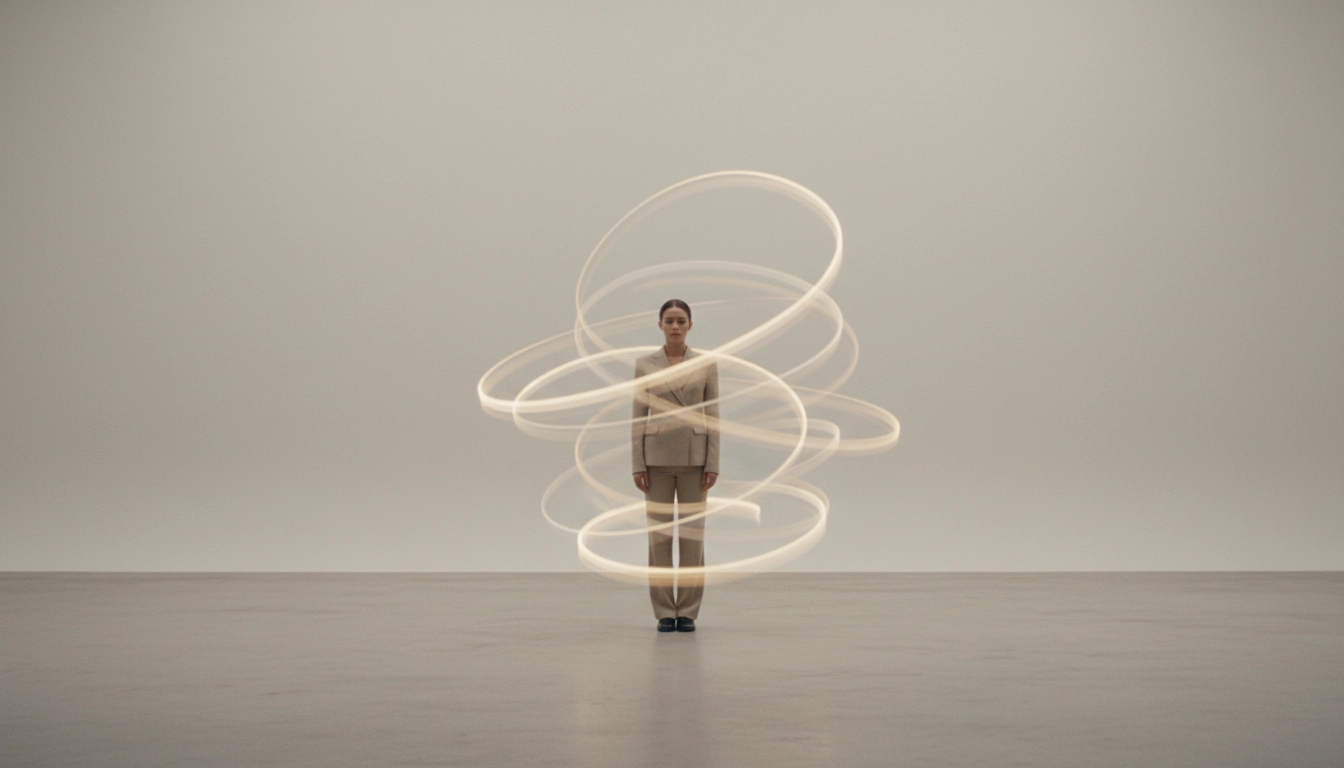

Yes — hypnotherapy can significantly help with anxiety, particularly when other approaches have stalled. Unlike talk therapy, which works primarily at the conscious level, hypnotherapy reaches the subconscious mind where anxiety patterns are stored as emotional memory. In a calm, focused state, the subconscious becomes accessible: outdated fear responses can be identified, traced to their origin, and repatterned — without medication and without having to white-knuckle your way through it. Most people notice a reduction in baseline reactivity, fewer triggers, and greater nervous system regulation within a handful of sessions. For South Florida residents dealing with generalized anxiety, panic symptoms, or anxiety rooted in unresolved emotional experience, hypnotherapy offers a structured, depth-oriented path to lasting change — not just symptom management.
If you’re in Fort Lauderdale and you’ve tried the usual routes—therapy, breathing apps, maybe medication—and anxiety still follows you around, you’re not missing willpower. You’re missing the right level of access.
Anxiety isn’t a thinking problem. It’s a nervous system problem rooted in the subconscious. And that’s exactly why hypnotherapy for anxiety can help when other approaches stall.
This guide breaks down what’s actually happening, why logic alone rarely ends an anxiety loop, and what working with the subconscious can change.

What Anxiety Actually Is (Below the Surface)
Most people understand anxiety as excessive worry. But that description only covers the conscious tip of the iceberg.
Below the surface—in the subconscious, which functions like a hard-drive mind—the nervous system is running older programs: threat files saved from past experiences, early emotional lessons about whether the world is safe, and automatic predictions about what’s about to go wrong.
Those programs don’t update themselves just because your life has changed or because you “know better” now. The subconscious doesn’t respond to logic the same way the conscious mind does. It responds to emotional experience.
This is why anxiety can feel like a roundabout. You move forward, make progress, feel calmer—then find yourself looping back to the same tight chest, the same spiral, the same 2am dread. Not because you’re broken. Because the hard drive is still running the old file.

Why Insight Alone Doesn’t Always Work
Talk therapy helps many people understand their anxiety. That’s genuinely valuable. But understanding and resolving are not the same thing.
Many anxiety sufferers in Broward County could write a detailed account of where their anxiety comes from, what triggers it, and why it doesn’t match the current threat level. And they still feel it every day. That’s because the part of the mind that generates anxiety isn’t the part reading your journal. It’s the subconscious, running automatic responses based on emotional memory. Insight lives in the conscious mind. Anxiety lives deeper.
The American Psychological Association recognizes that anxiety disorders involve persistent fear responses often triggered internally, independent of present-day danger—a pattern shaped by what the nervous system learned, not what the conscious mind currently believes.
Hypnotherapy addresses anxiety at the level where the pattern is stored—which is why it can produce change where insight alone has plateaued.
How Hypnotherapy for Anxiety Works?
Hypnotherapy isn’t relaxation audio. It’s structured access to subconscious material in a calm, focused state—not unconscious, not “out.” Most people feel similar to being absorbed in a film: aware, present, but inwardly quiet.
In that state, the analytical, resistant part of the mind steps aside slightly. This allows the work to reach the emotional layer underneath anxiety—rather than just discussing it from the surface.
What the Work Actually Targets
- The subconscious trigger: what the nervous system is predicting, and why
- The emotional memory behind the prediction
- The belief the subconscious formed around that experience (“I’m not safe,” “Something will go wrong,” “I can’t handle this”)
- The body’s learned alarm response—and repatterning it toward calm
Behavior is created by emotions. Emotions come from beliefs. Beliefs come from experiences. Working backwards—through the emotion to the root experience—is how anxiety patterns can actually update, not just be managed.
Common Anxiety Presentations This Work Helps With
People come to Fort Lauderdale hypnotherapy sessions for anxiety from many different starting points. Some of the most common include:
- Generalized anxiety that shows up as constant low-level dread or overthinking
- Panic symptoms—racing heart, tight chest, dizziness—that feel physical but are nervous-system-driven
- Social anxiety or fear of judgment that limits relationships and career
- Performance anxiety that kicks in right before high-stakes moments
- Health anxiety or hypervigilance to body sensations
- Anxiety that doesn’t match the situation but keeps showing up anyway
In South Florida’s high-pressure environment—long commutes, high cost of living, competitive careers—nervous systems are under constant load. The subconscious doesn’t always distinguish between a real threat and chronic background stress. It just keeps the alarm running.
What a Session Actually Looks Like
If you’ve never done hypnotherapy before, the unknown is often the scariest part. Here’s what actually happens:
The first part of a session is conversational—goals, current patterns, how hypnosis works in real terms. Not mystical. Practical. Ann Marie uses examples from your own life so the process feels grounded from the start.
Then comes a relaxation induction—calm, guided, similar to a focused meditation. You remain aware and in control. You can speak, pause, and redirect.
Once in that inward state, the work begins with what’s happening in the body and emotions—then follows the thread back to the belief or memory underneath. Anxiety patterns are often connected to early emotional imprints: a time when hypervigilance made sense. When that root is accessed and processed in a supported way, the emotional charge softens—and the nervous system starts to update its prediction. Sessions end with closure and positive suggestions. You leave feeling grounded, not exposed.
Anxiety and Trauma: Why Do They Often Overlap?
A significant portion of people dealing with anxiety aren’t just “high-strung.” Their nervous system is responding to something older—chronic stress, emotional neglect, unpredictability in early life, or experiences their mind labeled as overwhelming.
This is why anxiety work and trauma-informed hypnotherapy in Fort Lauderdale often overlap. The subconscious doesn’t always make a clear distinction between what we’d call “trauma” and what we’d call “anxiety.” It stores both as emotional files that predict future danger.
If your anxiety feels layered—like there’s something underneath it that you’ve never quite reached—exploring the connection through hypnotherapy for unresolved trauma may be the missing piece.
When anxiety also comes with inner conflict—part of you wanting to relax while another part stays on guard—understanding parts work in hypnotherapy can help explain those competing internal responses.
Virtual or In-Person Hypnotherapy for Anxiety in South Florida
Sessions are available both in-person in Fort Lauderdale (Broward County) and virtually for clients across South Florida. Virtual sessions are fully effective for anxiety work—hypnosis is an inward state, not a location-dependent one.
Many clients prefer virtual hypnotherapy sessions for anxiety for the privacy, consistency, and convenience of working from home. Others prefer the in-person setting for the structured environment and in-person presence.
Frequently Asked Questions
Q: Can hypnotherapy cure anxiety?
Hypnotherapy isn’t positioned as a ‘cure’—but it can significantly reduce anxiety by addressing the subconscious patterns driving it. Many people experience lasting shifts in their baseline reactivity, their triggers, and their ability to regulate. The goal is to update the hard drive, not manage the symptoms indefinitely.
Q: How many sessions does it take to help anxiety?
It depends on how long the anxiety has been present and how rooted the underlying patterns are. Some people notice meaningful shifts within 2–3 sessions. Others with longer-term or layered anxiety benefit from a more extended process. After an initial conversation, a realistic plan can be mapped.
Q: Is hypnotherapy safe for anxiety?
Yes. When conducted by a properly trained practitioner, hypnotherapy for anxiety is safe, calm, and non-invasive. You remain aware and in control throughout. Nothing is forced. The process is paced to your nervous system’s capacity.
Q: Will I have to relive difficult memories?
Not necessarily. The work can access emotional patterns without requiring graphic retelling. The focus is on what your nervous system learned—not on replaying events in detail.